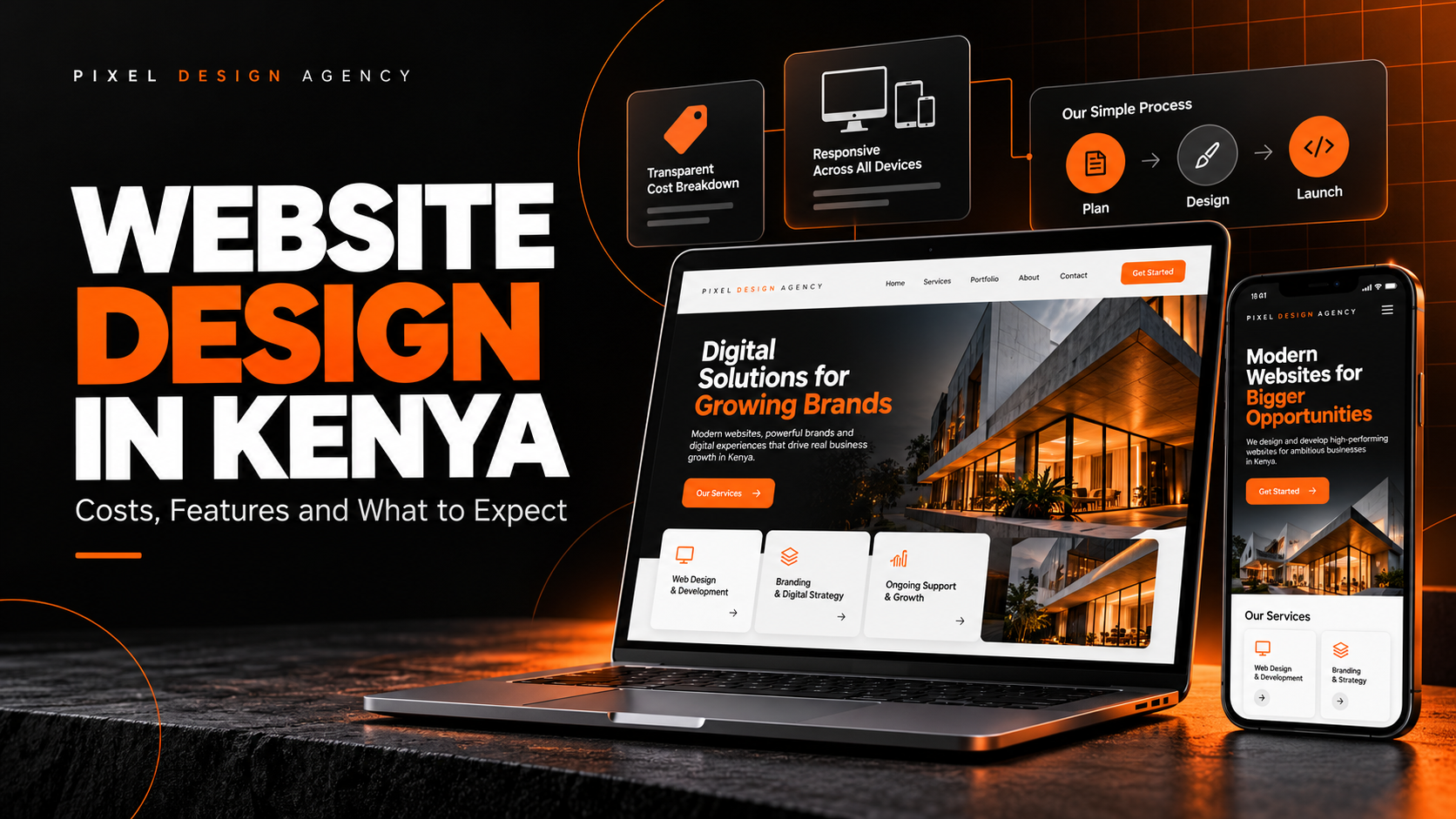

A business website should make it easy for customers to understand your services, trust your brand, and contact you. Whether you run a consultancy, retail shop, or training company, the right website can support your daily operations and marketing.
Before investing in website design in Kenya, understand what influences the cost, which features matter, and how the development process works.
What Determines the Cost of Website Design?
Website costs vary because businesses need different things. A straightforward company website requires less work than an online store with payments, delivery settings, and hundreds of products.
The main factors affecting your quotation include:
- Size: The number of pages and unique layouts required.
- Design: Whether the project uses an adapted template or more extensive custom layouts.
- Content: Copywriting, photography, graphics, and product information.
- Functionality: Bookings, payments, memberships, courses, or other integrations.
- Support: Training, maintenance, and assistance after launch.
Ask for a written breakdown of the initial project fee and recurring charges. Domain renewals, hosting, software licences, and maintenance should be clear before you commit.
When comparing quotations, check the deliverables rather than looking at the total alone. Confirm revision rounds, content responsibilities, ownership, and whether applicable taxes are included. This makes it easier to compare equivalent services and avoid misunderstandings.
Essential Features for a Business Website
Start with features that help customers complete their intended tasks.
Mobile-Friendly Design
Your website should work comfortably on phones, tablets, and computers. Visitors should be able to read text, navigate menus, and complete forms without zooming or struggling with small buttons.
Clear Service and Contact Pages
Explain what you offer, who it serves, and how customers can proceed. Make enquiry forms, business contact details, and relevant WhatsApp options easy to find.
Portfolio and Trust Signals
Show relevant projects, genuine testimonials, and accurate company information. These details help prospective customers assess your capabilities before contacting you.
Content Management
If your team needs to update services, publish articles, or add products, include suitable editing tools and handover training.
E-commerce Functions
Businesses selling online may need product categories, stock management, payment options such as M-Pesa, and clear delivery information. Include these requirements in the initial brief.
What to Expect During the Project
A website project usually begins with discovery: discussing your business, audience, goals, and required features.
Next comes the page structure and content plan, followed by design and development. You should have opportunities to review layouts and provide consolidated feedback.
Before launch, test important journeys, including enquiries, purchases, or bookings. Review mobile layouts, links, spelling, and contact details.
The final handover should cover administrative access, domain and hosting information, routine updates, and agreed support arrangements.
Build With Pixel Design Agency
A successful website begins with a clear scope and a team that understands your business.
Pixel Design Agency provides website design and development, e-commerce solutions, domain and hosting services, and ongoing support.
Ready to plan your website? Contact Pixel Design Agency to discuss your requirements and request a proposal tailored to your business.